


Cameroun 2025 : Perspectives macroéconomiques et de crédit, et analyse des programmes des candidats
August 2025
L’élection présidentielle d’octobre 2025 au Cameroun se tient avec un sortant candidat à un nouveau mandat. Le président Paul Biya, 92 ans, brigue un 8ᵉ mandat après 43 années au pouvoir. Fait notable, deux figures majeures de l’opposition qui étaient attendues dans la course – Maurice Kamto (finaliste de 2018) et le Dr Christopher Fomunyoh (éminent défenseur de la démocratie) – ne figurent pas sur la liste finale. Kamto a été écarté par l’autorité électorale et le Conseil constitutionnel pour des motifs techniques (son nouveau parti, MANIDEM, aurait présenté deux candidatures), décision confirmée en août 2025 malgré le tollé public. Fomunyoh, après des signaux d’intérêt initiaux, n’a finalement pas déposé de dossier (probablement en raison d’exigences de parrainage strictes et de considérations stratégiques). Leur exclusion a profondément reconfiguré le paysage de l’opposition et a ravivé les inquiétudes quant au degré de compétitivité du scrutin.
Cameroon October 2025 Presidential Election: Macroeconomic, Credit Outlook and Candidates Program Analysis
August 2025
Context and diagnosis. Cameroon ends 2025 with fragile macro stability, weak cash management, and conflict risk. Real GDP grew 3.3% in 2023 and is projected to grow around 3.5–4% in 2024–2025. Inflation hit 7.4% in 2023 after fuel reforms, then eased to mid-single digits as BEAC tightened and cut rates in March 2025. Public debt is near 42% of GDP and should edge down if discipline holds. Yet sovereign risk is high: Moody’s at Caa1/Stable after late external payments; S&P at B-/Stable; liquidity, arrears, and security costs persist, while the Anglophone crisis adds off-budget pressure and deters investment. Stability exists, but it is brittle and one shock from slippage. Candidate pathways. Biya preserves the IMF anchor and modest growth, but inertia and succession risk cap upside. Kamto can lift growth and FDI by attacking corruption, restoring the rule of law, and improving the business climate, with temporarily wider deficits. Libii’s decentralisation could jolt poverty reduction via large local transfers and SME support, yet it raises inflation and slippage risk unless controls and sequencing are tight. Muna audits the state, reallocates to local basics, and convenes dialogue to calm the conflict; growth rises as efficiency improves. Fomunyoh brings diplomatic credibility and a peace dividend; growth accelerates with better governance and renewed donor trust if a technocratic team is installed.
Dynamiques sociopolitiques internes et crise de la cohésion sociale : Une évaluation de la France (août-octobre 2025) utilisant un modèle d’IA Agentique
August 2025
Résumé : La France est confrontée à des perspectives de cohésion sociale fragiles à la fin de l'année 2025, mises à rude épreuve par l'aggravation des inégalités, l'érosion de la confiance du public et l’aggravation des fissures identitaires. La fragmentation politique a atteint un 1 niveau sans précédent, avec un exécutif affaibli et des extrêmes de gauche et de droite défiant le centre. Les disparités économiques – à la fois de revenus et géographiques – persistent malgré la robustesse de l'État-providence, alimentant les griefs dans les régions continentales et d'outre-mer. Les tensions sociales se manifestent par des protestations récurrentes, allant de grèves massives menées par les syndicats à des émeutes spontanées, indiquant une faible tolérance pour les politiques perçues comme impopulaires et les injustices non résolues. Les lignes de fracture culturelles autour de l'immigration, de la religion et de l'identité nationale sont de plus en plus polarisées, exacerbées par la désinformation dans la sphère numérique. Ce rapport applique une évaluation Rouge-Ambre-Vert pour évaluer les risques de cohésion inter- domaines et utilise une approche symbolique IA/graphe de connaissances pour cartographier les facteurs interconnectés. Le tableau 1 fournit un résumé stratégique, le rouge indiquant les risques critiques de cohésion dans les domaines politique et social, et l'orange signalant les domaines de préoccupation économique et culturelle. Malgré ces pressions, la France conserve des atouts notables en matière de résilience – une tradition d'institutions républicaines, des filets de sécurité sociale performants et une société civile engagée – qui pourraient aider à combler les fossés s'ils étaient exploités efficacement.
Cameroun 2025 – Analyse des dynamiques de pouvoir à travers un cadre d’IA agentique : rivalités au sein de l’élite et stratégies de succession
July 2025
Le Cameroun se trouve à un tournant critique au milieu de l’année 2025. Les tentatives du président Paul Biya de briguer un nouveau mandat ont intensifié les luttes de pouvoir internes parmi les élites du pays et révélé des fractures au sein de sa coalition dirigeante autrefois unifiée. En réponse, le régime emploie des tactiques autoritaires traditionnelles : éviction ou neutralisation des rivaux, remaniement des chefs militaires afin d’assurer leur loyauté, et répression de la dissidence pour maintenir le contrôle. La position officielle du gouvernement est marquée par une méfiance accrue et une consolidation du pouvoir, Biya s’entourant de généraux fidèles pour prévenir toute contestation. Par ailleurs, des alliés de longue date du Nord commencent à faire défection en invoquant des appels généralisés au changement. En coulisses, des factions soutenant le fils de Biya et d’autres figures influentes rivalisent pour gagner en influence dans la perspective d’une succession imminente. Toutefois, ces factions maintiennent publiquement un profil bas afin d’éviter tout conflit ouvert sous la direction de Biya. Parallèlement, la sécurité et la stabilité du Cameroun sont en jeu. L’armée demeure officiellement loyale, mais se trouve surchargée par la lutte contre l’insurrection dans les régions anglophones ainsi que contre des groupes islamistes armés dans l’Extrême-Nord. Si Biya reste aux commandes et que les élections de 2025 se déroulent sous son contrôle, le résultat le plus probable sera une victoire électorale orchestrée par le parti au pouvoir, garantissant une continuité à court terme mais au détriment de la légitimité populaire. Un tel scrutin, prévu pour octobre 2025, serait certainement marqué par une faible participation dans les zones en conflit, des allégations de fraude et une victoire du sortant perçue par beaucoup de Camerounais comme acquise d’avance. Nous prévoyons un score officiel pour Biya se situant entre 55 % et 65 % (en baisse par rapport aux 71 % de 2018), avec des gains de l’opposition dans les centres urbains et les régions occidentales compensés par les avantages bien ancrés du régime dans ses fiefs. Les disparités régionales seraient marquées : les régions anglophones du Nord-Ouest et du Sud-Ouest resteraient largement exclues du processus électoral en raison de la guerre en cours, tandis que le vote du Grand Nord, autrefois solidement acquis à Biya, se fragmenterait à la suite des défections d'influents leaders régionaux. Les scénarios post-électoraux couvrent un large éventail. Dans le meilleur des cas, le camp de Biya parviendrait à gérer une transition pacifique durant son prochain mandat, en promouvant progressivement un successeur (peut-être Franck Biya ou une figure consensuelle) avant l’émergence d’une crise majeure. Si cette transition est menée de manière inclusive, elle pourrait éviter un conflit profond et même ouvrir la voie à des réformes. Cependant, un scénario plus sombre menace si le régime dépasse les bornes : une élection contestée suivie de troubles civils. Le Cameroun pourrait alors entrer dans une phase périlleuse de manifestations massives et de répression violente – notamment dans des villes comme Yaoundé et Douala, où la frustration de la jeunesse atteint un point critique. La récente censure d’Internet et les arrestations de dissidents indiquent que le régime se prépare activement à étouffer toute contestation post-électorale. Pourtant, une répression sévère pourrait pousser l’opposition et les masses mécontentes au-delà du point de rupture, risquant de provoquer des affrontements violents, voire des fissures au sein de l’armée si celle-ci recevait l’ordre de tirer massivement sur les civils.
Cameroon 2025 Presidential Election POLITY-ORACLE Assessment (Post-Kamto Exclusion)
July 2025
Situational Diagnosis Cameroon’s 2025 presidential race has entered a tumultuous phase following the exclusion of Maurice Kamto, the prominent opposition leader, from the candidate list. On July 26, Elections Cameroon (ELECAM) released a provisional list of 13 approved candidates for the October 12, 2025, election – a list that notably omitted Kamto aljazeera.comreuters.com. President Paul Biya, 92 years old and in power for 43 years, seeks an eighth term aljazeera.comreuters.com. Other accepted candidates span a range of former regime insiders and opposition figures, including former Prime Minister Bello Bouba Maigari (UNDP) and ex-minister Issa Tchiroma Bakary(FSNC) – both longtime Biya allies who broke away to run – as well as younger opposition voices like Cabral Libii(PCRN), Joshua Osih (SDF), Akere Muna (Univers), Serge Espoir Matomba (PURS), and others cameroononline.orgcameroononline.org. 83 aspirants had filed to run, underscoring intense interest in political change cameroononline.orgcameroononline.org. The official campaign will unfold in September, leading to the single-round vote on October 12.
Cameroon 2025 – Analysing Power Dynamics Through an Agentic AI Framework: Elite Rivalries and Succession Strategies
July 2025
Cameroon is at a critical point in mid-2025. President Paul Biya’s attempts to secure another term have intensified internal power struggles among the country's elites and revealed fractures within his once-unified ruling coalition. In response, the regime is employing traditional strongman tactics: removing or silencing rivals, reshuDling military leaders to ensure loyalty, and suppressing dissent to retain control. The oDicial stance within the government is one of heightened suspicion and consolidation of power, with Biya surrounding himself with loyal generals to prevent challenges. Meanwhile, long-standing allies from the North are beginning to defect, citing widespread calls for change. Behind closed doors, factions supporting Biya’s son and other influential figures are competing for influence in what is expected to be a forthcoming succession. However, these factions publicly keep a low profile to avoid provoking open conflict under Biya’s leadership. Meanwhile, Cameroon’s security and stability hang in the balance. The military remains outwardly loyal, yet is stretched thin fighting an Anglophone insurgency and Islamist militants. Suppose Biya stays in command and elections proceed under his control. In that case, the most likely outcome is a managed electoral victory for the ruling party – ensuring near-term continuity but at the cost of popular legitimacy. Such an election (October 2025) would almost certainly be marred by low turnout in conflict areas, allegations of fraud, and an incumbent win that many Cameroonians will view as foregone. We forecast Biya’s official vote share in the 55– 65% range (down from 71% in 2018), with opposition gains in urban and western regions offset by the regime’s entrenched advantages. Regional disparities will be sharp: the Anglophone Northwest and Southwest will remain effectively disenfranchised by war, and the Far North’s vote, once solidly behind Biya, will splinter due to the defection of northern power-brokers. Post-election scenarios span a spectrum. In the best case, Biya’s camp manages a peaceful transition during the next term – for example, gradually elevating a successor (perhaps Franck Biya or a consensus figure) to take over before crisis strikes. If handled inclusively, this could avert a meltdown and open space for reforms. However, a worse outcome looms if the regime overplays its hand: a contested election followed by public unrest. Cameroon could then enter a dangerous phase of mass protests and heavy-handed repression, especially in cities like Yaoundé and Douala, where youth frustration is boiling over. The regime’s recent digital censorship and arrests of dissidents show it is gearing up to silence any post-election dissent. Yet, a harsh crackdown risks pushing the opposition and disaffected masses beyond the brink, potentially leading to violent confrontations or even fractures within the army if ordered to fire on civilians on a large scale.
Cameroon 2025 Election Forecast and Political Risk Assessment
July 2025
Our baseline forecast shows Maurice Kamto of the MANIDEM leading in support with around 60 % to 65 % of voting intentions. Incumbent President Paul Biya of the Cameroon People's Democratic Movement (CPDM) and challenger Cabral Libii of the Cameroon Reconciliation National Party (PCRN) garner about 10 % to 15 %. In an entirely free and fair election, Kamto 's chances of winning would surpass 90 %, with Biya’s below 10 %. However, due to Cameroon's history of electoral manipulation, the regime's incumbency bias” significantly boosts Biya's realistic prospects of staying in power. Our scenario analysis examines other possible outcomes. If all major opposition candidates unite behind one candidate, combined support could exceed 80 %, virtually ensuring victory in a fair election and risking a harsher response from the regime. Conversely, a highly fragmented field with over eighty registered candidates could allow Biya to win with a low plurality- possibly under 20 %- if opposition votes are split. Economic and security shocks, like sudden inflation or clashes in the Anglophone regions, could reduce Biya's support by about one to three percentage points, depending on voter turnout in opposition-strong areas. Our analysis points to increasing tensions among the elite surrounding President Biya. Succession talks, especially involving his son Franck Biya and Secretary General Ferdinand Ngoh Ngoh, are intensifying, increasing instability risks if the regime commits blatant fraud. Civil society and social media activity are at multi- year highs, reflecting frustrations over corruption, youth unemployment, and governance failures. A disputed result could trigger widespread protests or even military intervention similar to the 2023 coup in Gabon. To improve opposition chances, we advise top candidates to form a formal alliance or non-aggression pact to prevent vote-splitting. They should also heavily focus on voter mobilisation, especially in urban and Anglophone areas, by deploying poll watchers, establishing parallel vote count processes, and maintaining offline communication methods to counter internet shutdowns. Messaging should prioritise economic hardship, anti-corruption, and national reconciliation, steering clear of ethnic appeals. The opposition should also organise legal teams to contest unjust disqualifications and plan peaceful protests for possible election fraud. Although a transparent, fair election could lead to a historic win for Maurice Kamto, entrenched authoritarian practices and opposition fragmentation mean that careful alliance-building and vote-protection efforts are vital to turning public support into an official victory.

O2 Amiens – Evaluation de la durabilité et conformité à la directive CSRD
October 2024
Ce rapport évalue la durabilité et la conformité d’O2 Amiens, une petite entreprise (PME) opérant dans le secteur des services à la personne, en mettant l’accent sur le respect des critères environnementaux, sociaux et de gouvernance (ESG) et le respect de la directive sur le compte rendu de durabilité des entreprises (CSRD) et des obligations légales françaises. L’évaluation s’appuie sur les données disponibles provenant de diverses sources, notamment des états financiers, des rapports sectoriels et des directives réglementaires.

OZANGE.NET (Service ménage particuliers) – Evaluation de la durabilité et conformité à la directive CSRD
October 2024
Ozange.net, également connu sous le nom de MENAGE SERVICE PARTICULIERS, est une association fondée en 1985, opérant dans le secteur de l’assistance à domicile. Classée comme PME en 2021, elle emploie entre 50 et 99 salariés et est enregistrée auprès du Registre National des Associations. Son siège social est situé à Amiens, et elle fonctionne dans le cadre de l’Économie Sociale et Solidaire (ESS), soulignant son engagement en faveur de l’inclusion sociale et professionnelle. L’évaluation ESG d’Ozange.net révèle plusieurs défis de conformité et de gestion durable. L’organisation obtient un score de 25 en Certification des Informations sur la Durabilité, reflétant des lacunes dans la conformité aux normes de la Directive CSRD et aux exigences européennes. Le manque de certification par un tiers, noté 15, souligne l’absence de vérification externe des informations non financières, limitant la crédibilité de ses rapports.

CAP VITAL SANTÉ AMIENS – Evaluation de la durabilité et conformité à la directive CSRD
October 2024
Cap Vital Santé Amiens, est une entreprise française spécialisée dans la vente et la location d’équipements médicaux et orthopédiques. L’entreprise fait face à des défis majeurs liés à l’intégration de pratiques durables et responsables, essentielles pour sa compétitivité à long terme et sa conformité avec des réglementations en constante évolution, telles que la directive CSRD et le règlement européen sur les dispositifs médicaux (MDR). Les principaux constats sont les suivants : <ul> <li>1. Capital de durabilité à long terme (Score : 25) : L’entreprise présente des pratiques de durabilité limitées, avec peu d’investissements dans les technologies écologiques et une gestion insuffisante des compétences critiques.</li> <li>2. Perception de la criticité ESG (Score : 25) : L’absence d’intégration formelle des considérations ESG au sein de la stratégie d’entreprise limite sa capacité à répondre aux attentes des parties prenantes et à anticiper les exigences réglementaires.</li> <li>3. Notion de matérialité (Score : 25) : La gestion des risques ESG est déficiente, avec un manque d’évaluation formelle des risques matériels, exposant l’entreprise à des défis inattendus.</li> <li>4. Gestion des données (Score : 25) : Les systèmes de gestion des données ESG sont inexistants, avec des méthodes de collecte et de suivi non structurées, ce qui compromet la transparence et la fiabilité des rapports de durabilité.</li> <li>5. Conformité aux obligations ESG des PME (Score : 25) : Cap Vital Amiens se limite aux exigences minimales de conformité, sans adopter les outils de reporting simplifié disponibles pour alléger les charges administratives.</li> </ul>

Petits Fils Amiens (494773740) Évaluation de la Durabilité et Conformité à la Directive CSRD
September 2024
L’évaluation détaillée de la performance environnementale, sociale et de gouvernance (ESG) de Petits Fils Amiens révèle les atouts de l’entreprise dans son engagement envers la durabilité à long terme et l’intégration des principes ESG, la positionnant favorablement dans le secteur fortement compétitif de l’aide à la personne. Cependant, certains domaines critiques nécessitent une attention stratégique pour améliorer le profil de conformité et de durabilité globale de Petits fils Amiens. La performance financière robuste et le réseau en expansion de l’entreprise soulignent ses capacités opérationnelles, mais l’évaluation de la durabilité identifie également des opportunités de croissance et des domaines nécessitant une attention accrue.
Forests Dynamics and Sustainable Development Goals in the Congo Basin. Case Study of Cameroon, Congo, Central Africa Republic, Democratic Republic of Congo and Gabon
September 2024
The Congo Basin, located in west-central Africa, covers 3.7 million square kilometres and includes parts of Cameroon (11.8%), the Central African Republic (3.4%), the Democratic Republic of the Congo (54%), the Republic of the Congo (12.4%), Equatorial Guinea (1.3%), and Gabon (17.7%). This region boasts the world's second-largest tropical rainforest, characterised by various landscapes like rivers, swamps, and savannas. It supports a rich diversity of flora and fauna, with thousands of bird species, nearly 700 fish species, 400 mammal species, and approximately 10,000 species of tropical plants, 80% of which are endemic. This report examines forest and carbon stock dynamics in five countries within the Congo Basin—Cameroon, Congo, the Democratic Republic of the Congo, Gabon, and the Central African Republic—to assess the region's progress towards the 2030 objectives of halting deforestation and replenishing forests. It also analyses each country's state of carbon growing stock, focusing on SDGs and forest management. The methodology includes advanced statistical strategies based on automatic prompts for chains of thought utilised in a GPT context, leveraging recent advancements in large language models (LLMs) and the chain-of-thought (CoT) prompting technique.
French Fisheries and Sustainability
September 2024
This report aims to evaluate the performance of the French fishing industry in light of the United Nations Sustainable Development Goals (SDGs). Drawing upon diverse data sources, including INSEE, Agreste, the Ministry of Ecological Transition, and the OECD, the report provides a detailed analysis of France's economic and sectoral performance alongside international benchmarks. The data span several years and offer comprehensive insights into various aspects of the fishing industry, including economic output, employment, climate impacts, and sustainability indicators.

Le Secteur de l’aide à la personne face au vieillissement
September 2024
Le secteur des Services d'Aide à la personne (SAP) en France joue un rôle crucial dans le soutien des personnes dépendantes pour les activités de la vie quotidienne. Ce secteur est influencé par divers facteurs politiques, économiques, sociaux, technologiques, juridiques et environnementaux qui façonnent ses dynamiques et perspectives. Les politiques gouvernementales apportent un soutien significatif aux SAP via des subventions et avantages fiscaux, facilitant l'accès aux services pour les groupes vulnérables. Le cadre réglementaire impose des normes élevées en matière de qualité et de sécurité, assurant une prestation de services efficace et éthique. Cette régulation rigoureuse permet de structurer le secteur, mais nécessite des ajustements constants pour les prestataires afin de rester conforme aux exigences nationales et européennes. Économiquement, les SAP dépendent d'un financement mixte comprenant des fonds publics, privés et des remboursements d'assurance. La demande pour ces services varie en fonction de la conjoncture économique : la croissance stimule l'expansion, tandis que les périodes de crise limitent les ressources et restreignent l'accès. Les coûts de main-d'œuvre, particulièrement élevés dans ce secteur, imposent une gestion prudente pour maintenir l’équilibre entre la qualité des soins et la viabilité financière. Le vieillissement de la population française accroît fortement la demande pour les services à la personne, en particulier dans les régions où les niveaux de pauvreté et de perte d'autonomie sont élevés. L'innovation technologique transforme le secteur, avec des avancées telles que la télésanté et la surveillance à distance, améliorant l’efficacité des soins et réduisant la nécessité de visites en personne. Toutefois, l'intégration de ces technologies requiert des investissements dans les infrastructures numériques et des formations pour surmonter les défis de la littératie numérique. La gestion des données demeure une préoccupation majeure, nécessitant des systèmes sécurisés pour protéger la confidentialité des usagers. Enfin, les SAP sont de plus en plus confrontés aux enjeux environnementaux, avec des attentes croissantes pour des pratiques durables et une adaptation aux défis climatiques. Intégrer la durabilité dans les opérations devient une priorité pour aligner le secteur sur les normes écologiques tout en répondant aux besoins des usagers.
Tanzania Cigarette Public Limited Company Rasilimali ya Tanzania (Dar es Salaaam Stock Exchange)
August 2024
Tanzania Cigarette Co. Ltd., founded in 1961 and headquartered in Dar es Salaam, is a critical player in the tobacco sector of the consumer goods industry. The company's operations span cigarette manufacturing, distribution, marketing, and sales, serving domestic and international markets, including a significant presence in the Democratic Republic of Congo, Mozambique, and Zambia. Listed on the Dar es Salaam Stock Exchange under the ticker TCC, the company has demonstrated robust financial health with a notable performance in 2018.

Rapport ESG pour la côte d’ivoire. Opportunités d’investissements et innovations stratégiques
June 2024
Analyse Stratégique sur l'Investissement ESG en Côte d’Ivoire. La Côte d'Ivoire se positionne comme un marché clé pour les investissements respectueux de l'environnement, sociaux et de gouvernance (ESG), grâce à son économie en croissance et à son engagement envers le développement durable. Le pays a réalisé des progrès notables en réduisant la pauvreté et en améliorant l'accès à l'électricité, avec une intégration croissante des énergies renouvelables. Le cadre règlementaire du pays a également évolué avec des avancées significatives en matière de législation environnementale et de gouvernance d'entreprise, alignées sur les standards internationaux. Les secteurs de l'agriculture durable, des énergies renouvelables et des services financiers émergent comme des domaines clés pour l'investissement ESG, offrant des opportunités substantielles pour les investisseurs. Les investissements ESG en Côte d'Ivoire sont cependant confrontés à des défis, notamment la variabilité des critères ESG et les notations contradictoires, ce qui complique l'évaluation des opportunités. Il est également nécessaire d’améliorer les capacités infrastructurelles du pays pour soutenir une croissance durable. Le rapport recommande l’adoption d'évaluations rigoureuses des opportunités d'investissement en utilisant des critères ESG clairs et vérifiés, d'investir dans l'innovation, et de collaborer avec les acteurs locaux pour améliorer les pratiques de gouvernance. Développer des stratégies de mitigation des risques adaptées au contexte ivoirien est essentiel pour naviguer les défis du marché. Investir en Côte d'Ivoire représente une opportunité stratégique pour contribuer à un développement durable tout en générant des rendements ajustés aux risques. Les investisseurs doivent adopter une approche bien informée et adaptée pour exploiter pleinement le potentiel ESG du marché ivoirien.
Tanzania Tea Packers Ltd. Tatepa (Dar Es Salaam Stock Exchange)
May 2024
Tanzania Tea Packers Ltd. (TATEPA), a pivotal entity in Tanzania's tea sector, showcases a rich heritage and significant domestic and global footprint. This detailed report delves into TATEPA’s strategic posture, financial outcomes, market dynamics, and initiatives towards sustainability. TATEPA’s strategic orientation, underscored by market dominance, sustainability commitment, and robust supplier nexus, provides a solid platform for growth. Nevertheless, navigating operational inefficiencies, financial reconfiguration, and market expansion is vital for surmounting prevailing hurdles and securing long-term prosperity and stability.

NOTORE CHEMICAL IND PLC (NOTORE) Strategic Report
March 2024
Notore Chemical Industries Plc is a leading company in Sub-Saharan Africa's fertiliser production industry. It operates a unique urea plant and has a vertically integrated business model. The company is strategically located at Onne seaport, which gives it an edge in distribution and export capabilities. Notore is committed to community development, sustainable agriculture, and environmental stewardship through initiatives like the Village Promoter Program. Notore Chemical Industries Plc is at a strategic juncture where proactive measures and strategic investments are crucial for its sustained growth and market leadership. By addressing current challenges, embracing sustainability, and pursuing innovation, Notore can ensure long-term value creation for its investors and shareholders, contributing significantly to Africa's agricultural sector.
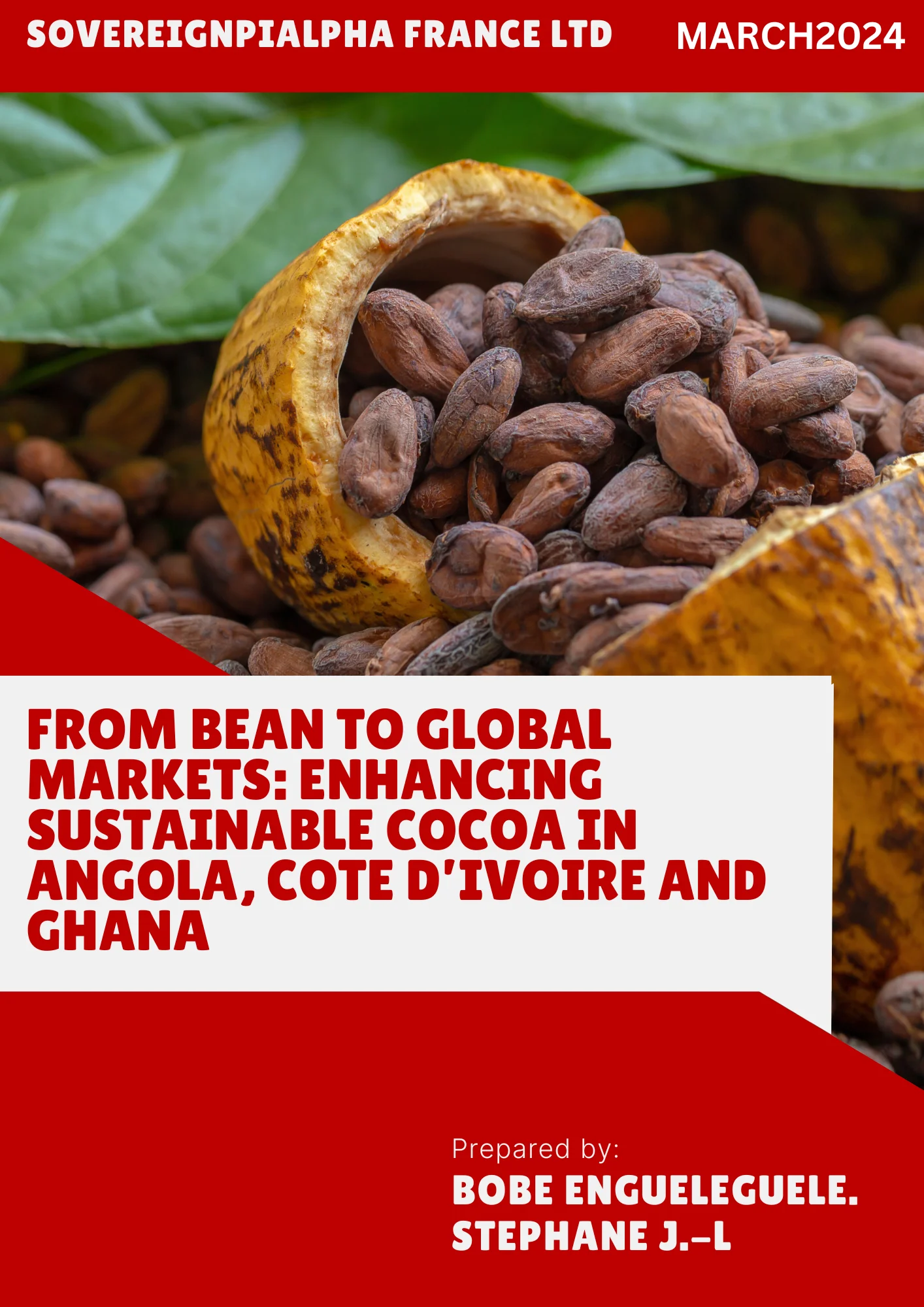
From bean to global markets: enhancing sustainable cocoa in Angola, Cote d’Ivoire and Ghana
March 2024
This report analyses the cocoa production challenges and strategic dynamics in Angola, Côte d’Ivoire, and Ghana, three major global players. The report examines how each country's unique historical, economic, and geographical context influences its role and capabilities in cocoa production, identifies each country's significant obstacles, and provides strategic recommendations for sustainable growth and compliance with international standards, particularly those related to environmental conservation and social responsibility.

Le secteur des activités immobilières dans les Hauts de France. Spécificités et défis.
March 2024
Le présent rapport se concentre sur le secteur de l’immobilier dans la région des Hauts-de-France. Il en analyse les dynamiques en mobilisant le modèle du Diamant de Porter. Sur la base de cette analyse, le rapport formule plusieurs recommandation stratégiques destinées à améliorer la compétitivité de l’immobilier régional.

Strengthening Madagascar’s Climate Change Resilience
February 2024
Madagascar, positioned off the southeast coast of Africa, is critically vulnerable to various climate hazards, including severe storms, droughts, floods, and epidemics. This vulnerability, compounded by its unique biodiversity and geographic isolation, makes comprehensive climate resilience strategies imperative for sustainable development. Despite having policies such as the National Development Plan and the National Adaptation Plan, their implementation could have been more consistent, primarily due to inadequate capacity and external shocks like the COVID-19 pandemic. There is an urgent need to strengthen these strategies and ensure their integration across all sectors to improve effectiveness.

Le secteur de la restauration dans les Hauts-de-France. Enjeux globaux, dynamiques locales.
January 2024
La filière de la restauration est cruciale pour l’économie française, offrant de nombreuses opportunités d’emploi et contribuant de manière significative à l’activité économique dans les territoires. Le pourcentage élevé de petites entreprises dans le secteur souligne son rôle dans le soutien des économies locales et de l’entrepreneuriat. La contribution de cette industrie au PIB national et son rôle dans la création de richesse sont évidents à travers sa contribution à la valeur ajoutée. L’utilisation de divers modèles statistiques pour analyser les dynamiques sectorielles procure un éclairage stratégique. Le rapport démontre la résilience des entreprises de la filière dans la région des Hauts-de-France, en même temps que les tensions économiques auxquelles elles sont confrontées. Elle confirme des tendances longues travaillées par les réalités locales qui sont des forces, mais aussi des vecteurs de risques à domestiquer.
Zambia Forestry And Forest Industries Corporation (Zaffico)(Zfco.zm) Strategic Report
January 2024
Zambia Forestry and Forest Industries Corporation PLC (ZAFFICO) is a leading player in Zambia's forestry sector. It has made significant strides in financial performance and strategic market positioning. Being a publicly listed entity, ZAFFICO offers investors and shareholders a unique chance to participate in Zambia's thriving forestry industry. Additionally, the government supports the corporation and has a robust focus on sustainable forest management. ZAFFICO represents a compelling investment opportunity within Zambia's forestry sector, offering a blend of robust financial health, strategic market dominance, and a commitment to sustainable practices. For investors and shareholders, the company's focus on long-term growth and adaptation to market and technological advancements ensure a promising outlook, albeit with a need for vigilance towards associated risks.
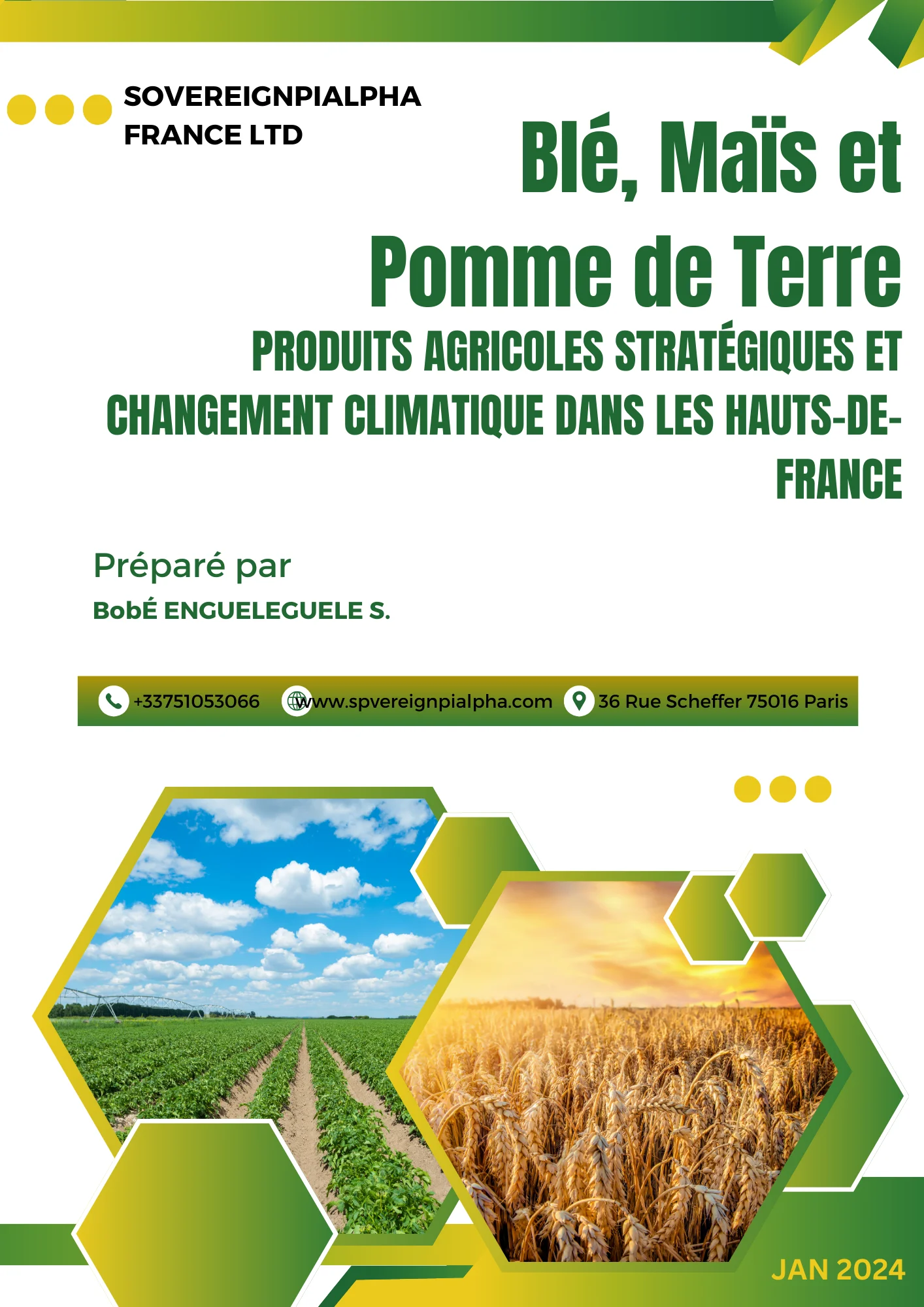
Blé, maïs et pomme de terre. Produits agricoles stratégiques et changement climatique dans les Hauts-de-France
January 2024
Ce rapport propose une analyse complète des productions de blé, de maïs et de pommes de terre dans les Hauts-de-France, en soulignant leur importance mondiale et régionale. Ces cultures sont essentielles non seulement en tant qu’aliments de base, et matières clés sur le marché agricole.
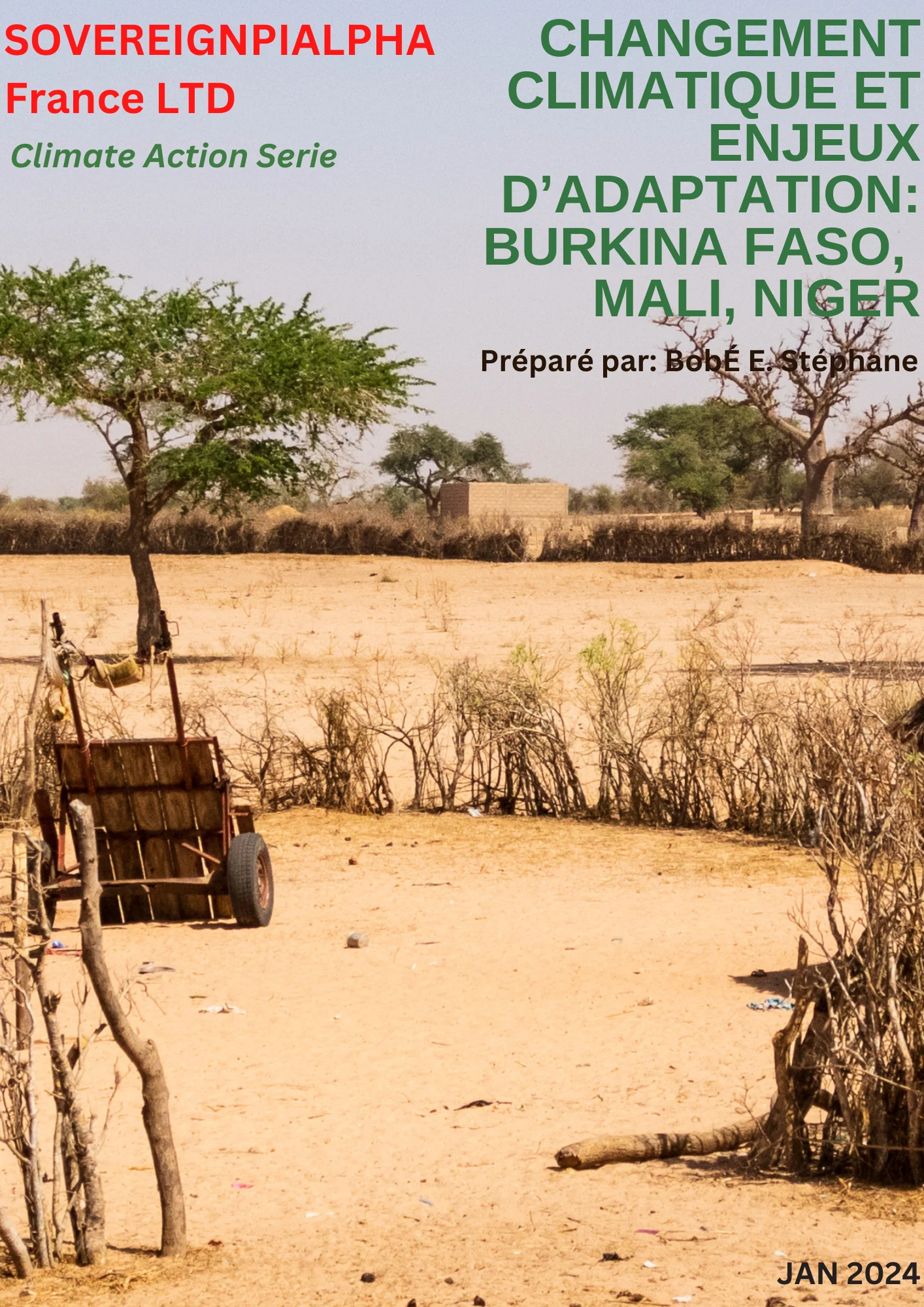
Focus climat. Changement climatique et enjeux d’adaptation: Burkina Faso, Mali, Niger.
January 2024
Le rapport présente un examen complet des impacts du changement climatique et des stratégies d’adaptation correspondantes dans la région du G5 Sahel, en se concentrant sur le Burkina Faso, le Mali et le Niger. Il englobe les tendances climatiques récentes, les projections dans le cadre de diverses trajectoires socio-économiques partagées (SSP) et les conséquences socio-économiques de la variabilité climatique sur ces pays. Les principales conclusions indiquent un réchauffement notable et des régimes de précipitations erratiques au cours des dernières décennies, affectant considérablement l’équilibre écologique et le tissu socio-économique de la région. La région devrait connaître une augmentation continue des températures et des régimes de précipitations fluctuants selon différents scénarios SSP, SSP585 prévoyant les impacts les plus graves, y compris des épisodes de canicule accrus et des régimes de précipitations hautement imprévisibles.
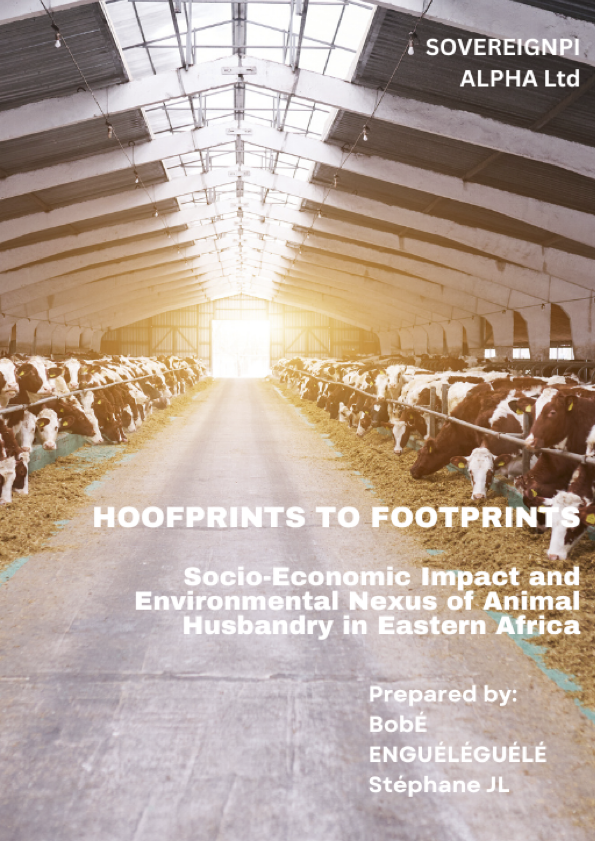
Hoofprints to Footprints: Socio-Economic Impact and Environmental Nexus of Animal Husbandry in Eastern Africa – Botswana, Ethiopia, Kenya, Rwanda & Uganda
November 2023
This report provides a detailed overview of the livestock sector in five key African countries: Botswana, Ethiopia, Kenya, Rwanda, and Uganda. It begins by examining the governance structures and policies governing the livestock industry, followed by an analysis of the Gross Value of Animal Production (GVAP), which measures the economic impact but also acknowledges its limitations in capturing the full socio-economic value of livestock. The report emphasizes the vital socio-economic role of livestock, not only in economic terms but also as a cultural and social asset that includes providing draught power and manure for crops. It also addresses the environmental and health challenges within the sector and discusses the quality and scope of permanent pastures which are crucial for sustainable livestock production. The analysis includes livestock inventory crucial for disease control and understanding production and trade dynamics. The report uses advanced AI-ML models to predict future trends, particularly concerning meat production, trade, and climate impact. Supported by data from reputable sources like FAO and the World Bank, the report offers a transparent and robust basis for future strategic recommendations and outlines a path for sustainable development in these nations' livestock sectors.
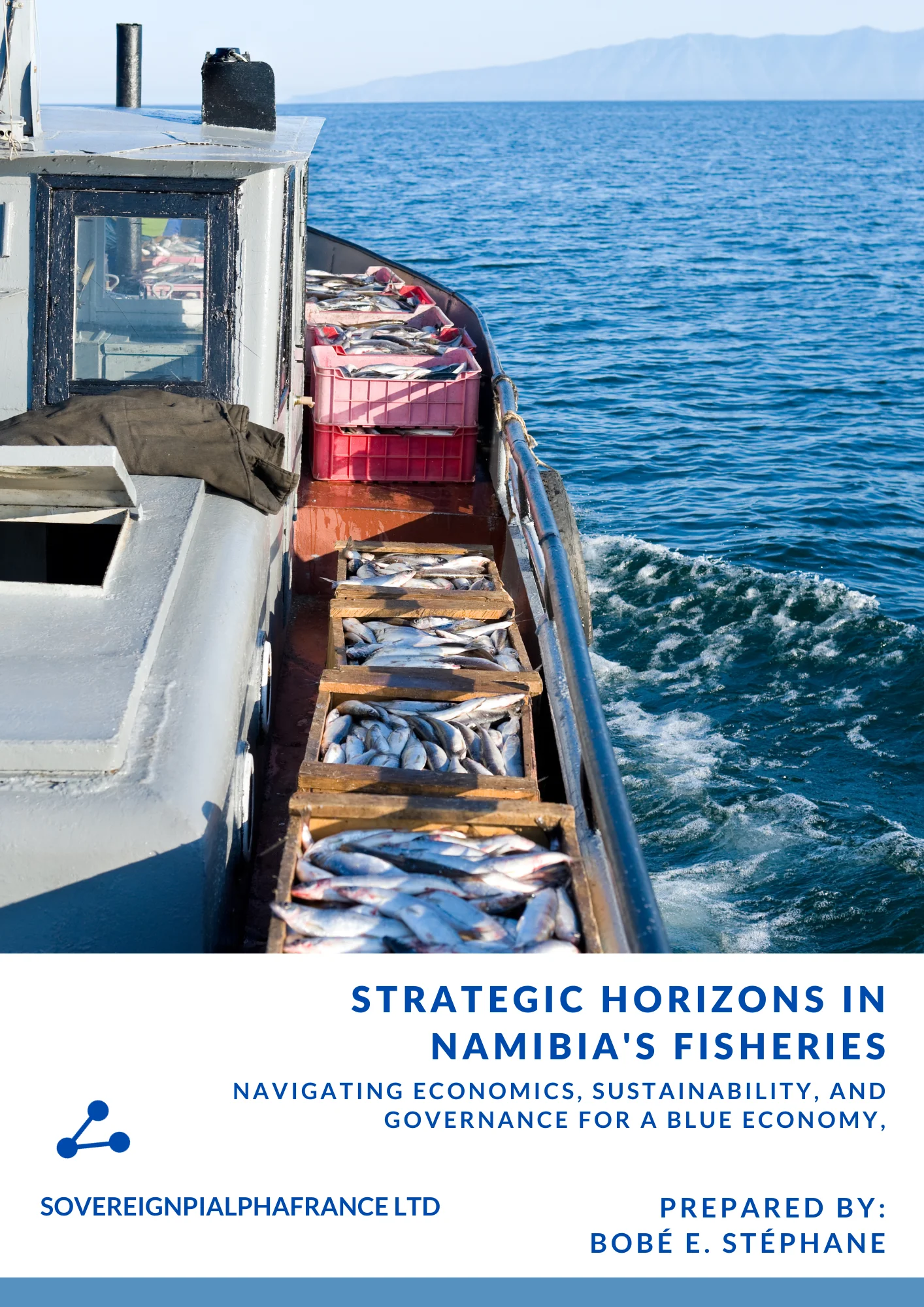
Strategic horizons in Namiba’s fisheries
September 2023
Namibia's fishing sector is pivotal to the country's economy, contributing 4.1% to the GDP and 15% to export revenues. Governed by the Ministry of Industrialisation, Trade, and Small and Medium Enterprise Development (MITSMED) under the Foreign Investment Act of 1990, the sector is buoyed by Namibia's membership in the Southern African Customs Union (SACU) and the Southern African Development Community (SADC). The industry is notably diverse, including marine, freshwater, and aquaculture sub-sectors. The fisheries industry is a significant revenue generator, with marine landings alone totalling around 550,000 tons and an average worth of NAD 10 billion (approx. 625 million EUR) as of 2017. Primarily, the exports include hake and horse mackerel. Namibia ranks third in Africa and 30th globally in fish capture, emphasising the sector's economic potential. Despite its promising outlook, the industry grapples with illegal fishing, high operational costs, and limited access for disadvantaged communities. Furthermore, over-exploitation and the decline of certain fish stocks add a layer of complexity to the challenges faced. The government has actively been implementing policies to foster sustainability and equitable development. The report assesses the sector's organisational performance and readiness for change.
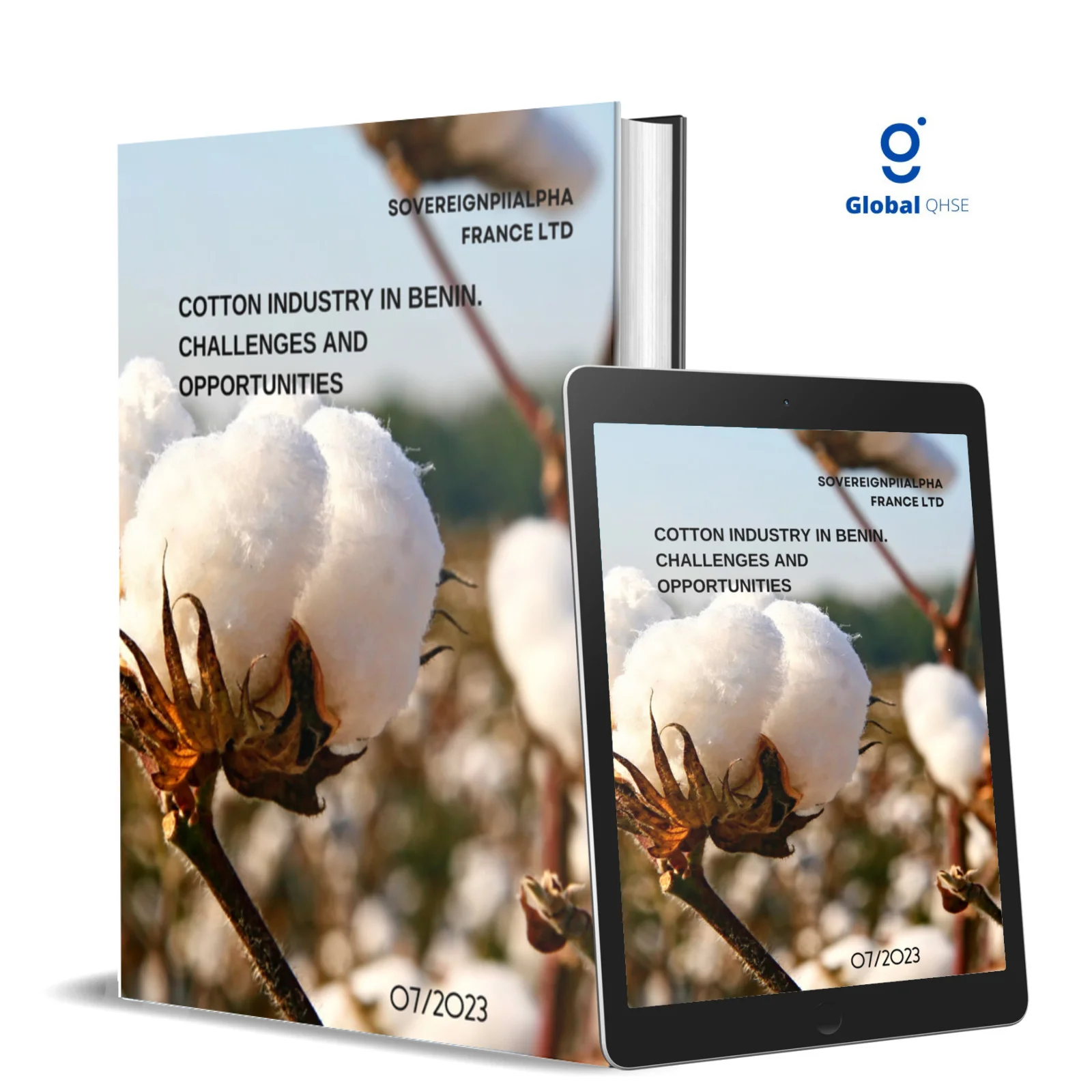
Cotton industry in Benin
July 2023
This report provides a detailed analysis of Benin's cotton industry in 2023, considering the complex macroeconomic conditions. Despite social disparities and poverty, Benin's GDP growth rebounded significantly thanks to robust trade ties, particularly with Nigeria. The primary industries in Benin include cotton, the Port of Cotonou, telecommunications, and various cash crops. The cotton industry is a critical player in the country’s economy and is affected by multiple structural factors such as political, economic, social, technological, legal, and environmental aspects. In the face of fluctuating macroeconomic conditions, Benin's ability to strengthen its cotton industry will depend on its ability to navigate rising worldwide interest rates, increasing borrowing costs, high inflation, and high public debt. The hostile economic environment, reduced aid budgets, and decreased Chinese financing raise concerns about debt sustainability and economic growth. Amidst the difficulties the cotton industry faces due to unfavourable macroeconomic conditions and climate change, the report highlights the significance of effective public policies. It stresses the importance of allocating public funds to address the weaknesses and opportunities present in the sector. However, the rising costs of adaptation and mitigation pose a challenge in balancing the needs of the industry and combating climate change. The report suggests solutions such as obtaining more concessional finance, encouraging private climate finance, and utilising concessional finance to boost personal finance.
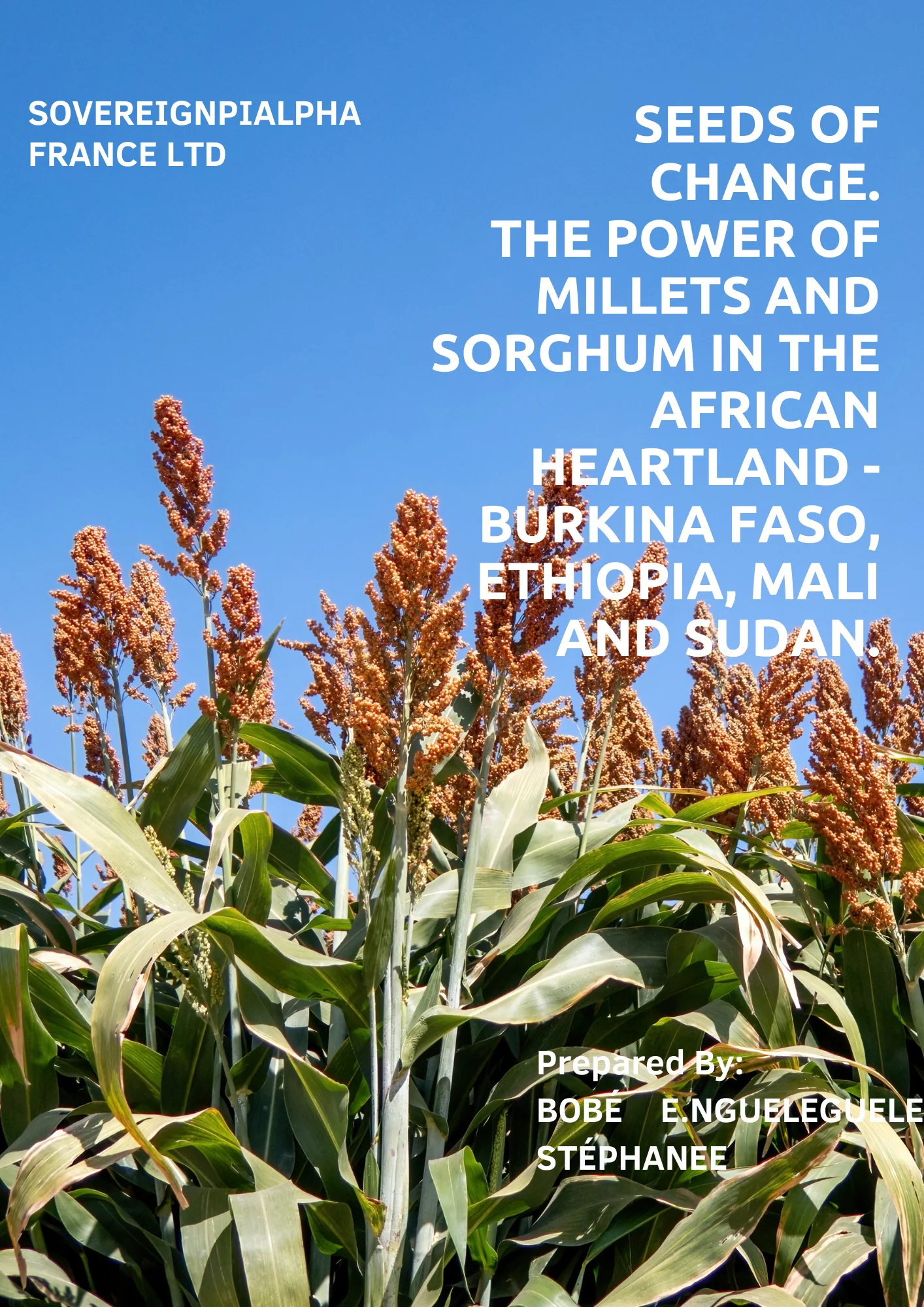
Seeds of change. The power of millets and sorghum in the African heartland – Burkina Faso, Ethiopia, Mali and Sudan
July 2023
This report comprehensively analyses sorghum and millet production in Burkina Faso, Ethiopia, Mali, and Sudan. These countries have unique but interconnected agricultural environments and face challenges like climate change, economic shifts, and technological development. We aim to understand how they tailor their production methods to both local needs and global pressures. The report identifies the internal factors that enable these nations to compete effectively in agriculture. It scrutinises key elements like labour, capital, and natural resources and evaluates the market demand for sorghum and millet, considering price volatility, consumer preferences, and trade dynamics. Additionally, the study looks at the framework that fosters innovation in the agricultural sector, considering alliances, methods, and technological advancements that could spur industry growth.

African agriculture 2.0. Strategic pathways for resilience and growth
July 2023
This report analyzes agriculture in African nations, focusing on how political institutions impact agricultural performance. It discusses the increasing global food demands and how they affect Africa's role in global food production and trade. Key challenges include climate change, resource degradation, and socioeconomic issues like gender disparities and the burdens on small-scale producers. The report suggests transformative changes through a developmental state approach, emphasizing digitalization as a critical step to enhance agricultural resilience and sustainability. It combines data from interviews and international organizations to propose a digitalization strategy for modernizing Africa's agriculture, making it more sustainable and efficient.
Chilean wine industry
June 2023
The Chilean wine industry possesses several strengths that contribute to its success. First, the country benefits from a favourable climate characterised by diverse microclimates that provide optimal conditions for grape cultivation and enable producing a wide range of wine styles. Additionally, Chilean winemakers have established a reputation for producing high-quality wines with consistent flavour profiles. Their commitment to modern winemaking techniques and strict quality control measures has contributed to this strength. Moreover, the industry has embraced sustainable practices, such as organic and biodynamic farming, water conservation, and renewable energy usage, which appeal to environmentally conscious consumers. However, the Chilean wine industry also faces specific weaknesses. One notable weakness is its limited brand recognition compared to well-established wine regions like France or Italy. Overcoming this weakness necessitates increased marketing efforts and brand-building strategies. Additionally, the industry has primarily focused on cultivating a limited range of grape varietals, which may hinder its ability to cater to diverse consumer preferences and limit market potential.

Seeding the future: Brazil’s agricultural powerhouse
June 2023
This report comprehensively analyses Brazil's agriculture sector using a SWOT (Strengths, Weaknesses, Opportunities, and Threats) framework. Brazil is recognised as an "agricultural powerhouse" in Latin America, with strengths including abundant arable land, solid agricultural output, and a robust agribusiness sector. The sector has demonstrated solid productivity and technological integration, contributing to its competitiveness. However, the industry also needs help, including decreased investment in agricultural machinery, infrastructure gaps, and little value addition.
Growth Harvest: Unveiling Competitive Dynamics and Strategic Opportunities in Latin America and the Caribbean Agriculture Industry
June 2023
This report evaluates the agriculture industry in Latin America and the Caribbean, focusing on competitive dynamics and strategic opportunities. It reviews key factors such as market trends, governmental policies, and technological advances, and highlights the region's strong global position in essential agricultural commodities. Challenges like inadequate market integration and infrastructure bottlenecks are identified as obstacles to competitiveness. The report emphasizes the importance of enhancing export strategies, adopting sustainable practices, and integrating advanced technologies to maintain and improve market competitiveness. It also stresses the need for regional collaboration to optimize efficiency and competitiveness. Overall, the report advocates for embracing global trends and innovation, suggesting that such strategies will position LAC countries as formidable global agricultural players and contribute to broader economic and sustainability goals.
Harvesting Strengths, Tackling Weaknesses: A Comprehensive Analysis of Argentina’s Agricultural Sector
June 2023
The following report presents a SWOT (Strengths, Weaknesses, Opportunities, and Threats) analysis of Argentina's agricultural sector. This sector plays a pivotal role in the country's economy, contributing over 50% of its foreign exchange earnings. It is a significant global producer and exporter of soybeans, corn, wheat, and beef crops. The analysis will examine the sector's internal capabilities (strengths and weaknesses) and external environment (opportunities and threats). The aim is to provide a comprehensive understanding of the current state of the sector and potential future directions, considering factors such as policy, infrastructure, environmental sustainability, technological advancements, and market trends. The report's findings are based on data from reputable sources, including the USDA Foreign Agricultural Service and the World Bank.